Guided by our design-led mantra, we will continue to challenge the status quo, with market-changing products, while being thoughtful in our actions, taking care of our people, our stakeholders and our planet.
Our impact, our responsibility is our mantra. We know we aren’t yet perfect, however we can always strive to be better and improve our impact on the wider world both socially and environmentally.
As businesses face increasing scrutiny over the environmental impacts of packaging, material selection has become a strategic decision, not just an operational one. From food producers to pharmaceutical distributors, organisations are reassessing what they use, why they use it, and what happens after it’s discarded.
Let’s break this down clearly and practically.
What Are the Environmental Impacts of Different Packaging Materials?
We believe sustainable packaging is not about “good” versus “bad” materials. It’s about understanding the environmental impacts of packaging and choosing the right material for the right application.
We use cardboard outers. We incorporate plastic film around our wool liners. We use paper. Why? Because performance, hygiene, moisture control and regulatory compliance all matter, especially in temperature-controlled food and pharmaceutical supply chains.
The conversation should not be about eliminating materials at all costs. It should be about intelligent material selection, lifecycle impact and system-wide thinking.
Looking at Packaging Through a Lifecycle Lens
A Lifecycle Assessment (LCA) considers environmental impact from raw material extraction through production, transport, use and disposal.
Regulatory bodies such as the European Commission and the UK Government emphasise lifecycle thinking in their circular economy strategies, because focusing on just one stage, such as recyclability, doesn’t give the full environmental picture.
When assessing packaging, we look at:
- Raw material origin (renewable vs fossil-derived)
- Energy required for production
- Carbon emissions (CO₂e)
- Product protection performance
- Reuse potential
- End-of-life impact (recycling, composting, landfill persistence)
Comparing Packaging Materials
Wool-Based Insulated Packaging
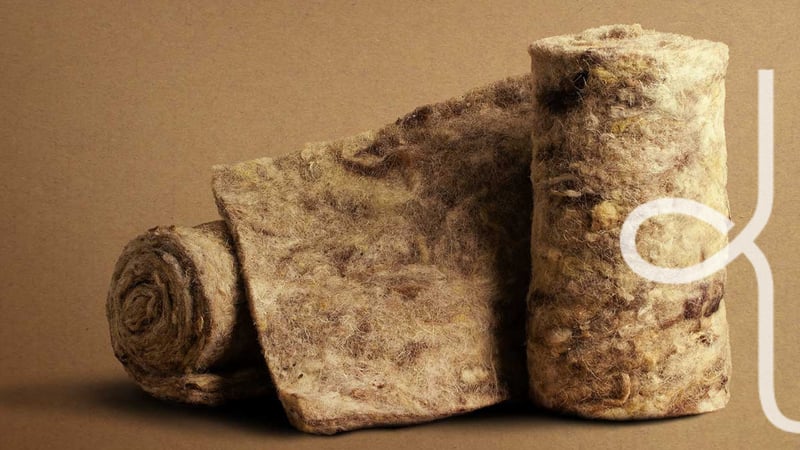
Wool offers a fundamentally different environmental profile because it is part of a biological cycle rather than a fossil-based one. Sheep regrow fleece annually, making wool a continuously renewable fibre. Unlike synthetic polymers, wool does not rely on petrochemical extraction.
Processing Woolcool involves going through multiple hot baths with a mild detergent rather than high-temperature polymer production. This significantly alters its energy profile compared to synthetic insulation materials. As a natural keratin fibre, wool is biodegradable and compostable at end-of-life, returning nutrients back to the soil rather than persisting for generations.
From a carbon perspective, wool fibres are grown, not manufactured from fossil fuels. Natural fibres can temporarily store carbon during growth, creating a different carbon dynamic than petroleum-derived materials.
Performance is equally important. Wool is a highly effective natural insulator, capable of maintaining temperature integrity for chilled food and pharmaceutical applications. This matters because preventing spoilage reduces overall carbon impact and the prevention of the loss of products.
For businesses seeking credible sustainable packaging materials, Woolcool offers:
- Renewable sourcing
- Reduced fossil fuel dependency
- High thermal performance
- Reusability
- Compostable, biodegradable end-of-life
Plastic-Based Insulated Packaging
Fully plastic solutions, such as expanded polystyrene boxes, are lightweight and effective insulators but are made from non-renewable fossil fuels. They have high production energy requirements and long-term landfill persistence. Their production requires fossil fuel extraction followed by energy-intensive chemical processing and polymerisation. This gives plastic packaging a high embodied energy profile before it even reaches the customer.
In terms of carbon, the OECD estimates that plastics are responsible for approximately 3.4% of global greenhouse gas emissions across their lifecycle. When evaluating the environmental impacts of plastic packaging of food products, this fossil-based carbon contribution is significant, particularly for single-use insulated formats.
One of the most commonly asked questions we encounter is: what are some environmental disadvantages to plastic packaging? The key challenges include long-term landfill persistence, often measured in centuries, limited recyclability for food-contact materials, and the risk of microplastic pollution. While plastic can offer strong thermal performance, its end-of-life profile remains problematic within a circular economy model.
Paper & Cardboard Packaging
Paper and corrugated cardboard are generally viewed more favourably due to their renewable origin. When sourced from responsibly managed forests, timber is a regenerative raw material. Paper also benefits from
well-established recycling infrastructure across the UK and Europe.
However, pulp and paper production can be energy- and water-intensive. While often lower in fossil carbon than virgin plastic, the overall carbon footprint varies depending on recycled content and transportation weight. Additionally, paper alone does not provide strong thermal insulation, meaning temperature-controlled packaging often requires supplementary materials, which changes its lifecycle impact.
At end-of-life, paper biodegrades significantly faster than plastic. That said, if disposed of in anaerobic landfill conditions, it can generate methane, a potent greenhouse gas. So while paper performs well in recyclability and renewability, it is not automatically low-impact in every application.
Regulatory & Market Context
The regulatory landscape is tightening. Extended Producer Responsibility (EPR) schemes across the UK and EU are increasing financial accountability for packaging waste.
The European Parliament and UK Parliament continue to introduce measures aimed at reducing plastic waste, increasing recyclability rates and driving carbon transparency.
For businesses, this means material choice is no longer just operational, it is strategic. Selecting materials aligned with future regulation reduces compliance risk and supports ESG reporting obligations.
Looking Beyond the Material Alone
It is important to recognise that sustainable packaging is not simply about swapping one material for another. True evaluation of the environmental impacts of packaging must include performance.
If insulation fails and products spoil, the environmental cost of wasted food or pharmaceuticals often outweighs the packaging footprint itself. Effective temperature control, therefore, is central to responsible packaging design.
Natural fibre insulation demonstrates that performance and environmental responsibility do not need to be competing priorities.
The environmental impacts of packaging vary considerably across materials. Plastic-based insulation carries high fossil carbon and long-term waste challenges. Paper offers renewability but may require additional components for temperature control. Wool provides a renewable, biodegradable and high-performance alternative aligned with circular economy principles.
For forward-thinking businesses, choosing the right packaging is about more than protection, it is about designing systems that reduce fossil reliance, minimise waste and support long-term sustainability goals.